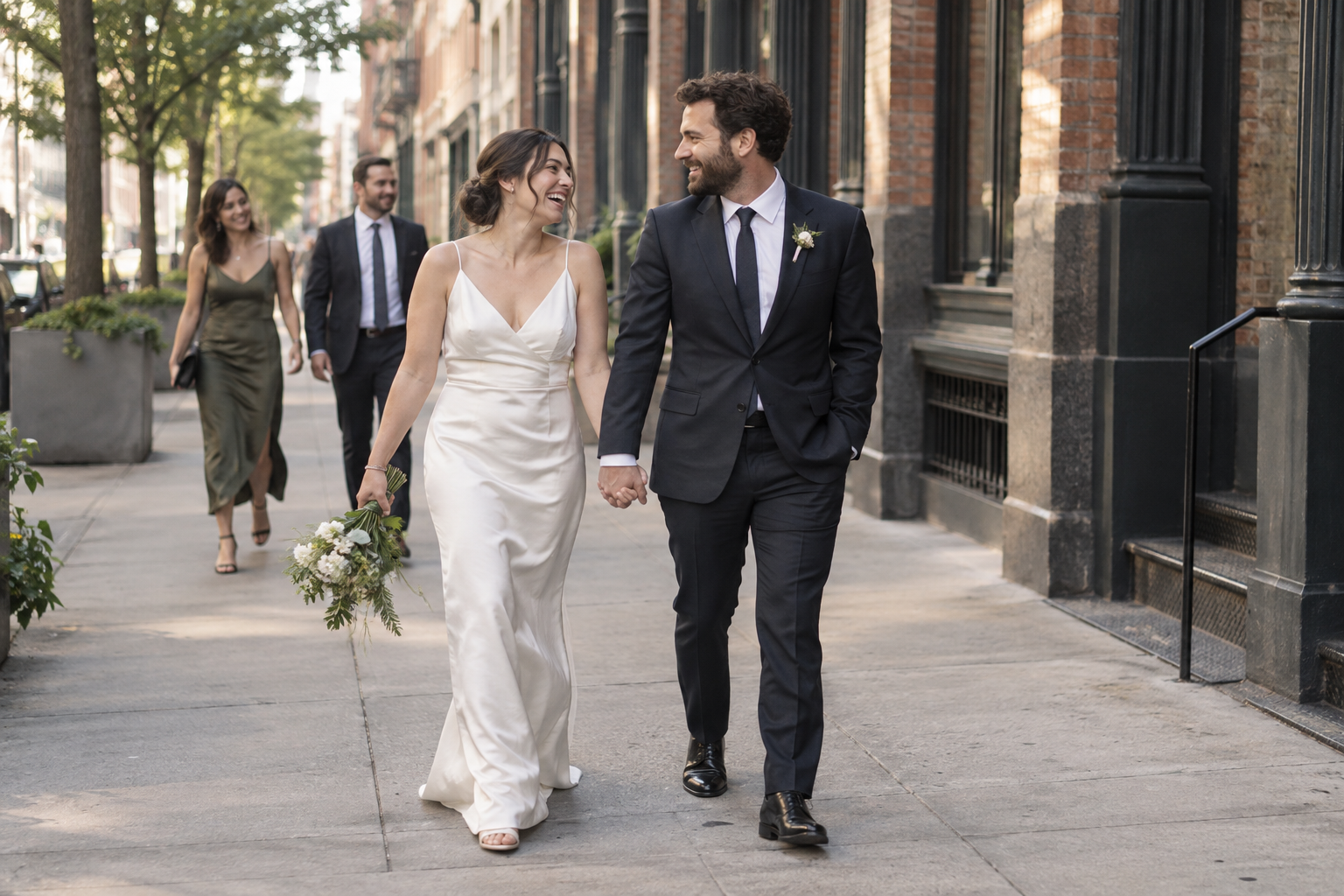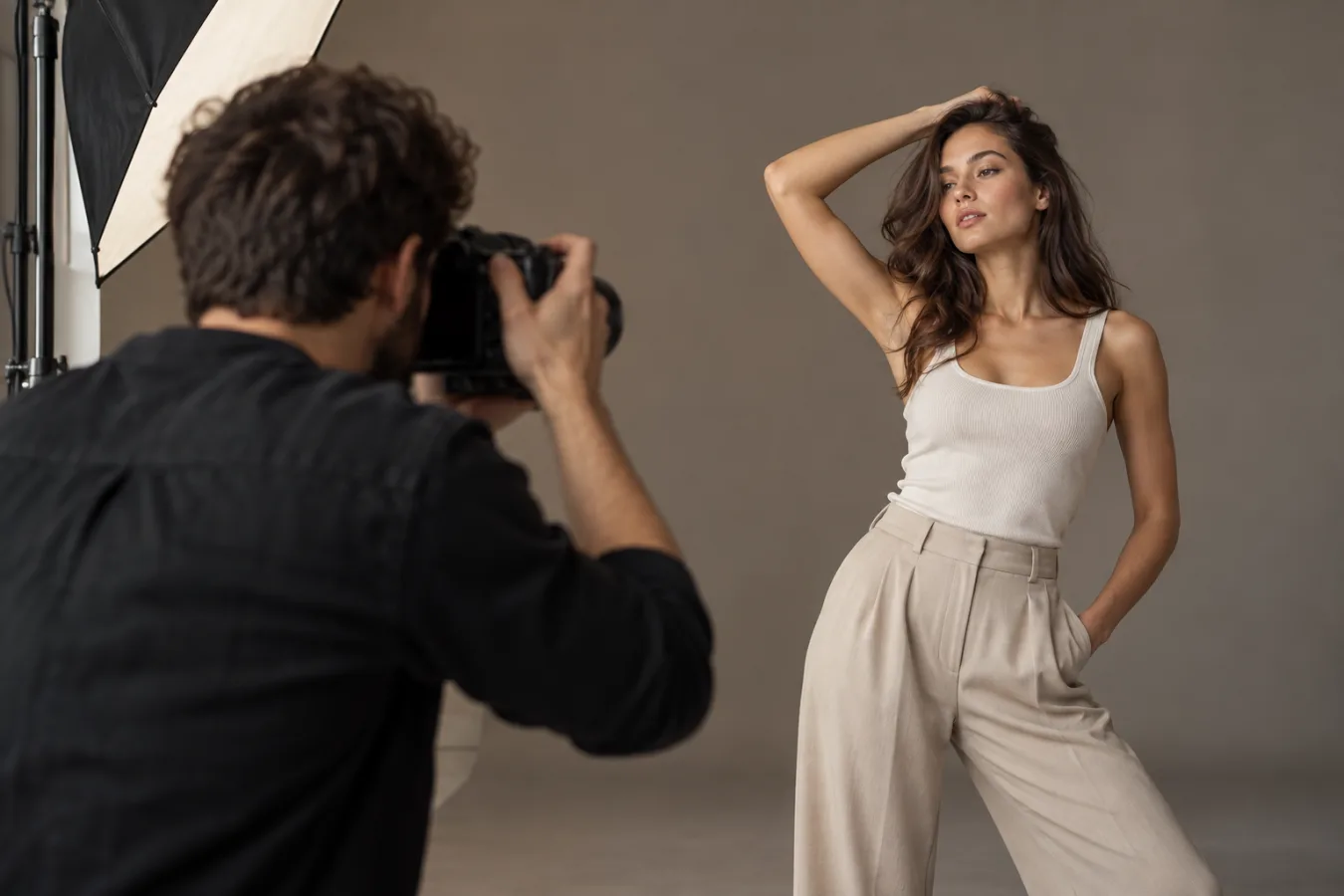
A model’s role in a photoshoot goes beyond looking good in front of a camera. Models use poses, facial expressions, movement, and body language to communicate a concept and help create images that serve a specific purpose. Whether you are building your first modeling portfolio, preparing for agency submissions, or working on a commercial or fashion shoot, understanding your responsibilities can make the experience more productive.
Knowing what to expect also helps you work more confidently with the photographer, prepare the right wardrobe, and understand how each image contributes to your overall portfolio.
What Is a Model’s Role in a Photoshoot?
A model’s primary role is to bring the intended visual concept to life. This means using appearance, posture, expressions, and movement to communicate the mood, style, or message the photographs are meant to convey.
The exact responsibilities depend on the type of shoot. A fashion model may need to highlight clothing and styling, while a commercial model may need to communicate an approachable personality or a particular lifestyle. A model participating in a portfolio test shoot may focus on demonstrating versatility, natural expressions, and the ability to work comfortably in front of the camera.
Across these different settings, a model generally helps the photographer by:
- Following direction about poses, angles, and positioning.
- Using facial expressions and body language to support the concept.
- Showing a range of looks, movements, and expressions when needed.
- Working collaboratively with the photographer and other people involved in the shoot.
- Arriving prepared with suitable clothing and an understanding of the session’s purpose.
- Remaining adaptable when a pose, lighting setup, or creative direction changes.
The goal is not to perform a series of perfect poses. It is to create images that communicate something clearly and suit their intended use.
What Does a Model Do During a Photoshoot?
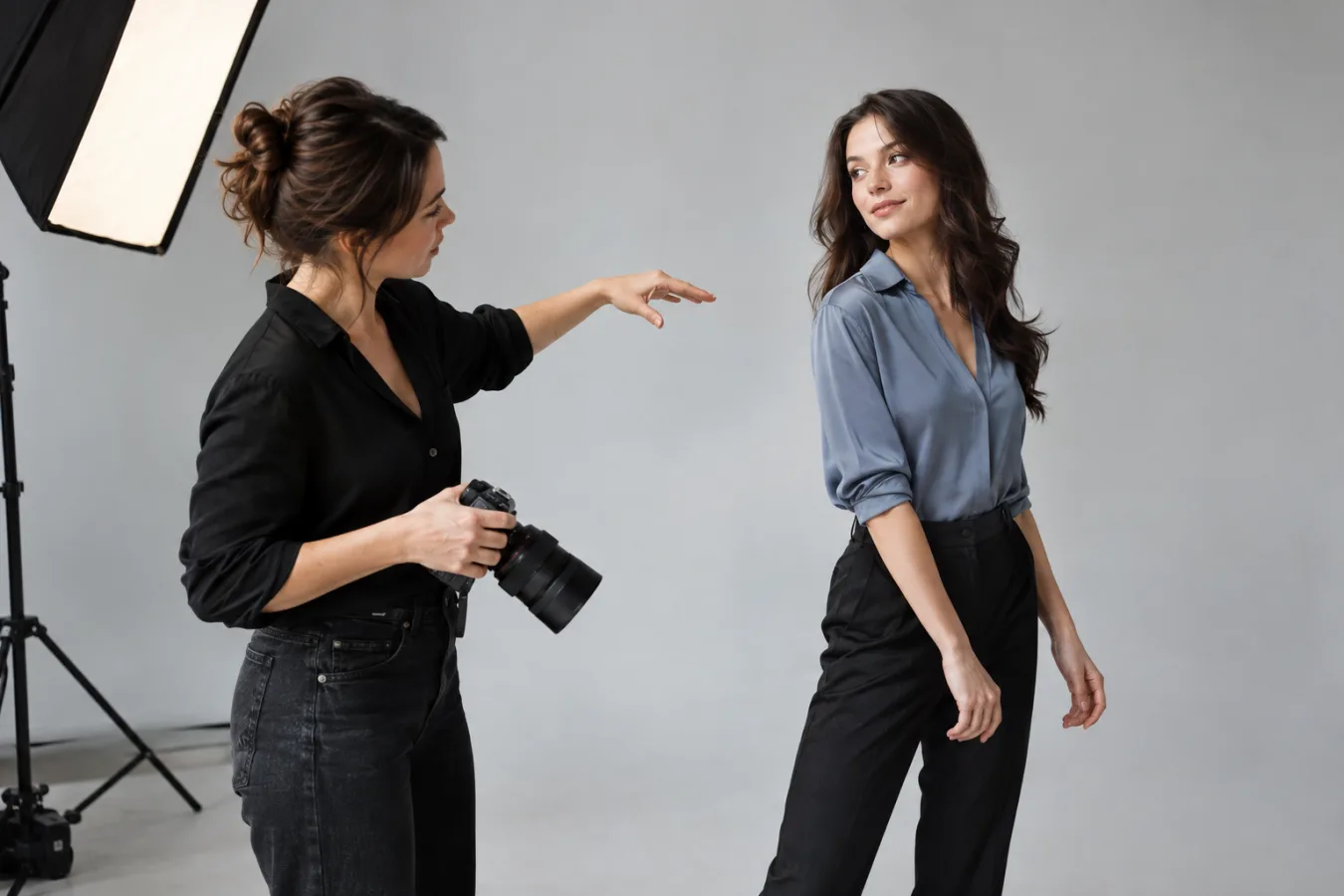
A photoshoot usually involves several stages, and the model contributes to each one. Understanding these responsibilities can help beginners feel more prepared and experienced models work more efficiently.
1. Understand the Concept and Intended Results
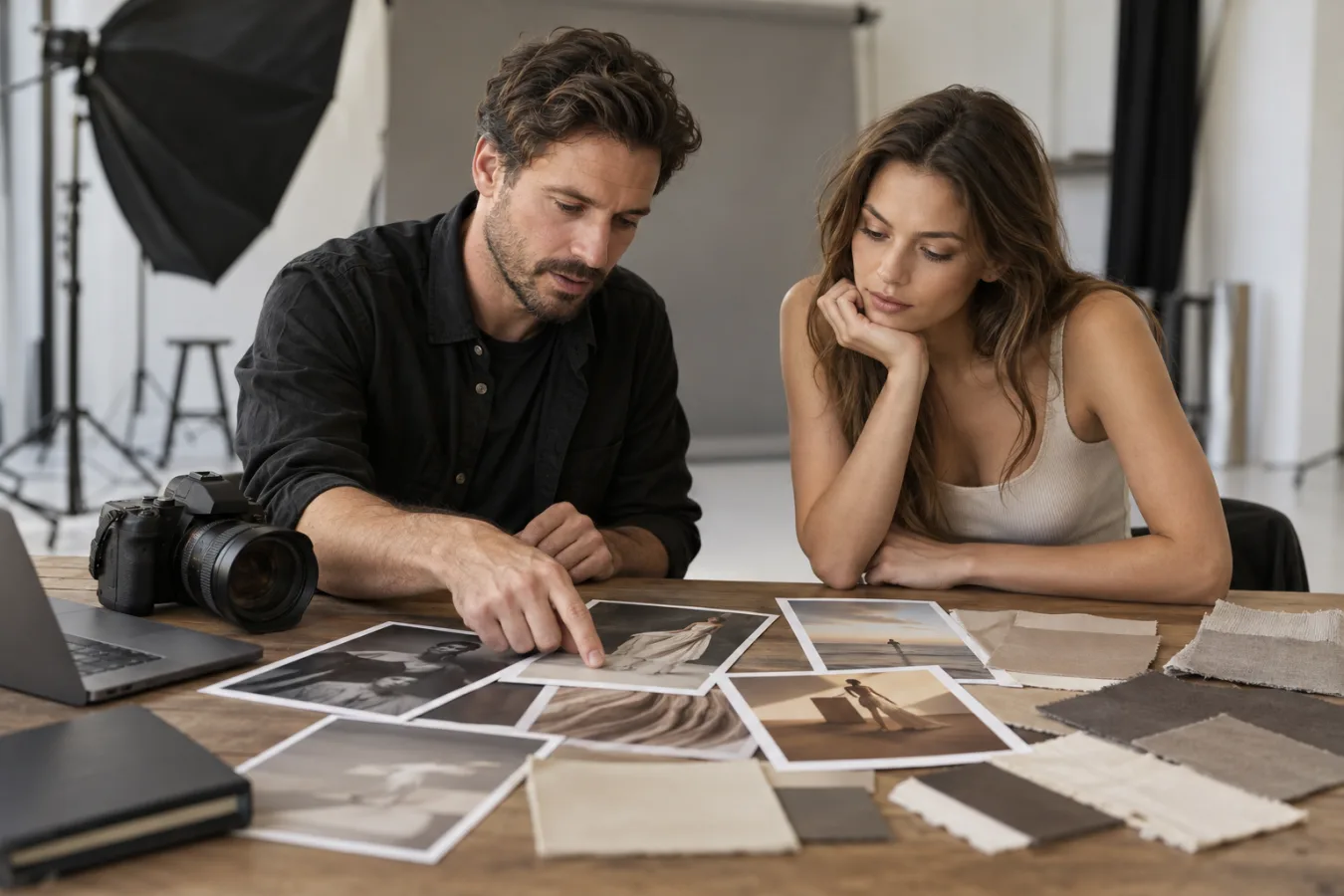
Before the session begins, the model should understand what the photographs are intended to achieve. The goal might be to develop a modeling portfolio, showcase a clothing collection, create commercial images, or explore a particular editorial style.
Knowing the purpose helps you make appropriate choices about posing, expressions, and movement. For example, a natural portfolio image may call for a relaxed expression and simple posture, while a fashion concept may require more dramatic body language.
If the creative direction is unclear, ask questions before shooting begins. Understanding the desired mood and overall look is more useful than guessing what the photographer expects.
2. Pose for the Camera
Posing is one of a model’s most visible responsibilities. It involves positioning the body, adjusting posture, directing the face, and finding angles that work with the camera’s perspective.
Effective posing often depends on small adjustments rather than complicated movements. A slight turn of the shoulders, a change in chin position, or a shift in weight can affect the overall composition.
Models should learn to:
- Experiment with standing, seated, and full-body poses as appropriate for the shoot.
- Adjust their shoulders, arms, hands, and posture deliberately.
- Move between poses smoothly instead of relying on one fixed position.
- Pay attention to how clothing falls and whether the pose supports the intended image.
- Follow the photographer’s direction while remaining aware of their own body position.
You do not need to know every professional pose before your first session. Being willing to experiment and make adjustments is an important part of the process.
3. Use Facial Expressions to Communicate Emotion
Facial expressions help establish the mood of an image. A small change in the eyes, mouth, or direction of the gaze can make a photograph feel confident, approachable, serious, playful, or contemplative.
Models should practice a range of expressions that fit the type of work they want to pursue. Commercial photography may call for warmth and approachability, while fashion or editorial photography may use more dramatic or restrained expressions.
Rather than forcing an expression, focus on the feeling the image is meant to communicate. If you are unsure what is working, reviewing a few photographs with the photographer can help you understand how your expressions appear on camera.
4. Follow Direction and Make Adjustments
The photographer may suggest changes to your posture, hand placement, gaze, expression, or position in relation to the light. A model’s role is to listen, try the adjustment, and remain open to feedback.
Direction can be especially helpful for beginners who are still learning how the camera captures their movements. Instead of treating feedback as criticism, view it as practical guidance toward the desired result.
It is also useful to communicate. If an instruction is unclear, ask the photographer to explain or demonstrate the movement. A collaborative approach can make the session more comfortable and help everyone work toward the same goal.
5. Maintain Energy and Consistency
A photoshoot may require multiple poses, outfits, expressions, or setups. Models need to remain engaged and make small adjustments between frames, even when the changes seem subtle.
Consistency matters when a series of images needs to feel connected. At the same time, controlled variation can give the photographer more options during image selection.
Take brief pauses when appropriate, stay attentive to direction, and communicate if you need clarification or a reasonable break. Working steadily is generally more productive than rushing through every pose.
6. Collaborate on the Final Look
Photography is a collaborative process. The model contributes posing, expression, and movement, while the photographer makes decisions about composition, framing, lighting, and image capture. Depending on the project, styling and other creative elements may also shape the final result.
A successful collaboration requires both preparation and flexibility. The model should understand the intended look while allowing room for adjustments and experimentation.
How Does a Model’s Role Change by Photoshoot Type?
Not every modeling session calls for the same skills. The purpose of the photographs determines which aspects of a model’s performance deserve the most attention.
Portfolio and Test Shoots
A portfolio or test shoot is often intended to show a model’s potential, appearance, range, and ability to work in front of the camera. The model may need to demonstrate natural expressions, simple poses, different angles, and a variety of looks.
For beginners, these sessions can also provide valuable practice. They offer an opportunity to become more comfortable with posing and discover which expressions or positions work well on camera.
Before participating in a test shoot, clarify its purpose, the kinds of images being created, and how the resulting photographs are expected to be used.
Fashion and Editorial Shoots
In fashion photography, the model helps present clothing, accessories, styling, and the overall visual concept. Poses should support the garments rather than obscure important details.
Editorial shoots may call for more expressive movement, unusual angles, or a stronger sense of character. The model must interpret the creative direction while adapting to the composition and mood of each image.
Commercial Shoots
Commercial modeling is generally focused on images used to promote products, services, or brands. The model’s expressions and body language should support the message the photographs are intended to communicate.
Depending on the brief, this may mean appearing approachable, confident, relaxed, energetic, or professional. Understanding the intended audience can help the model make choices that fit the project.
Beauty and Portrait Shoots
Beauty photography places particular emphasis on the face, skin, hair, makeup, and subtle expressions. Small changes in head position, gaze, or facial tension can have a noticeable effect on the image.
Portrait-focused sessions may require less movement than fashion shoots, but they still benefit from attentive posing and natural expressions. Models should follow direction carefully and avoid assuming that a close-up requires no posing skill.
How Should a Model Prepare for a Photoshoot?
Preparation helps you focus on the work instead of making last-minute decisions. Before your session, confirm the concept, planned looks, wardrobe expectations, and intended use of the images.
Use this checklist to get ready:
- Review the creative direction: Understand the purpose of the shoot and the kind of images being created.
- Plan your wardrobe: Choose outfits that suit the concept, and confirm whether multiple looks are needed.
- Practice posing: Try different angles, postures, hand positions, and expressions in front of a mirror or camera.
- Prepare your essentials: Pack the clothing, shoes, and other items appropriate for the planned session.
- Think about your goals: Decide what you want the photographs to demonstrate, such as versatility, a natural appearance, or a particular modeling style.
- Ask questions in advance: Clarify anything you do not understand about the concept, expectations, or image use.
You do not need to memorize dozens of poses. A few practiced basics, combined with the ability to respond to direction, can provide a strong starting point.
What Should a Model Avoid During a Photoshoot?
Common mistakes often come from trying too hard to control every detail or assuming that more dramatic posing will always produce better images. A few adjustments in approach can make a meaningful difference.
- Repeating the same pose: Explore variations in posture, angles, and expression so the photographer has a useful selection of images.
- Ignoring the brief: A pose that looks impressive may not suit the intended clothing, product, mood, or audience.
- Overdoing expressions: Forced smiles or exaggerated facial movements can distract from the intended message.
- Moving without awareness: Uncontrolled movement can make it harder to maintain a consistent pose or composition. Practice deliberate, controlled transitions instead.
- Taking feedback personally: Direction is a normal part of collaborative photography. Use it to refine your performance.
- Failing to communicate: Ask for clarification when needed, and speak up if you are uncomfortable with a pose or request.
Professionalism does not mean agreeing to every request without question. A productive session should involve clear communication, mutual respect, and an understanding of the agreed creative direction.
How Can You Tell Whether You Are Doing a Good Job as a Model?
A successful modeling performance is not measured solely by how attractive you look in a photograph. It also depends on whether you help create images that meet the goals of the session.
Useful signs of progress include:
- You can move between poses without needing constant reminders.
- Your expressions suit the intended mood of the photographs.
- You can make adjustments after receiving direction.
- You demonstrate variety without losing the consistency required for the shoot.
- You understand how your poses support the clothing, composition, or concept.
- You communicate clearly and contribute to a respectful, collaborative working environment.
For new models, improvement is often gradual. Reviewing selected images can help you identify what works, recognize habits that need adjustment, and decide which skills to practice before your next session.
How Does a Test Shoot Help You Develop as a Model?
A test shoot can be useful when you need to build or update a modeling portfolio and demonstrate your potential to agencies, clients, or other industry contacts. It can also help you understand how your appearance, expressions, and posing translate into photographs.
The value of a test shoot depends on whether its images serve your goals. Before arranging one, consider:
- Which types of modeling are you interested in pursuing?
- What images are missing from your current portfolio?
- Do you need straightforward portraits, full-body images, or more varied looks?
- What will the selected photographs be used for?
- How will image selection, editing, and delivery be handled?
A focused session designed around specific needs can be more useful than a large collection of photographs that all look alike. Think about the range you need to demonstrate, and communicate those priorities before the shoot.
Frequently Asked Questions
Does a model need professional experience to participate in a photoshoot?
Not necessarily. Beginners can participate in modeling sessions, including test shoots intended to help develop a portfolio. Preparation, willingness to learn, and the ability to respond to direction are useful starting points.
Does a model need to know how to pose before the shoot?
Basic posing practice can help you feel more comfortable, but you do not need to know every pose in advance. Practice a few natural positions and expressions, then work with the photographer to make adjustments during the session.
Who is responsible for deciding which poses to use?
The photographer may provide direction based on the concept, lighting, composition, and intended results, while the model contributes movement, expression, and interpretation. The exact working relationship varies by project, so it is helpful to discuss expectations beforehand.
What should a model bring to a photoshoot?
Bring the clothing, shoes, and other essentials appropriate for the agreed concept. If multiple outfits or particular styling choices are planned, confirm those requirements in advance rather than assuming what will be needed.
What is the difference between a test shoot and a commercial modeling shoot?
A test shoot is commonly used to develop a model’s portfolio and explore their potential or range. A commercial shoot is generally created to promote a product, service, or brand. The purpose of the images influences the planning, posing, and creative direction.
What should I clarify before agreeing to a modeling photoshoot?
Ask about the shoot’s purpose, the intended style, wardrobe expectations, image selection and delivery, and how the photographs may be used. It is also sensible to clarify any fees, usage rights, or other terms that apply before committing to the session.
Prepare for Your Next Modeling Photoshoot
A model’s role in a photoshoot combines preparation, posing, expression, adaptability, and collaboration. The strongest results come from understanding the purpose of the images and using your body language and expressions to support that goal.
If you are developing a portfolio or preparing for your first professional session, start by identifying the images you need and the type of modeling you want to pursue. Photo Studio 308 offers modeling photography in New York, NY. Visit the Photo Studio 308 website to learn more and explore whether a modeling photography session fits your goals.